Across Havering
Why one street moves in a dry summer and the next never does
Describe what you have noticed at your home. A specialist firm will read it and tell you whether the ground beneath your street is likely to be the cause, without charging you anything.
London Clay across the north of the borough
The higher ground around Collier Row, Harold Hill and Havering-atte-Bower sits on London Clay. This dense soil swells when wet and shrinks when dry, changing volume by as much as ten percent between seasons.
Houses built here typically rest on shallow strip footings poured before modern depth standards existed. When a long summer dries the clay out, the ground pulls away from the underside of those footings. The wall above loses support and cracks open, usually tapering wider at the top.
Trees make the problem sharper. A mature oak or poplar draws thousands of litres of water from the clay each week through its roots. If that tree stands within striking distance of a house, the soil directly beneath the nearest wall dries faster than the rest. The footing settles unevenly. Specialist firms investigating subsidence in these northern areas always look at root spread alongside the cracking pattern, because the two together explain why one terrace drops while the houses fifty metres away stay level.
Thames terrace gravels through the middle belt
Running roughly through Romford, Hornchurch, Gidea Park and Elm Park, a band of river-laid sand and gravel sits above the chalk. These Thames terrace deposits drain freely. Water passes straight through them rather than being held in the pore spaces, so they do not swell or shrink with the seasons the way clay does.
That drainage comes with its own risks. A leaking drainpipe or a soakaway that overflows can wash fine particles out of the gravel over months, leaving voids beneath a concrete slab or a strip footing. The ground does not shrink; it simply empties out underneath.
Homes on this belt rarely show the seasonal opening and closing of cracks seen further north. Movement here tends to be steady and progressive once it starts. A specialist surveyor will check the drainage runs before looking anywhere else, because a broken pipe joint is often the whole story on gravel. Finding the leak stops the loss, and filling the void stabilises the footing.
Alluvium and soft ground towards Rainham
South of the main railway line, down towards Rainham and the marshes beside the Thames, the geology changes again. Peat, silt and soft alluvial clay lie close to the surface. These soils compress under weight rather than shrinking with drought.
A house built on made-up marshland settles slowly for years after construction. The movement is usually uniform at first, but if one corner bears more load, or if the fill was tipped unevenly, differential settlement follows. Floors slope, door frames rack, and partition walls crack where they meet the ceiling.
Groundwater levels matter here more than anywhere else in the borough. Drainage work on neighbouring land, or even prolonged pumping for a nearby construction site, can lower the water table enough to let the soft layers consolidate further. Specialist engineers working near Rainham often specify piled foundations for new extensions because shallow footings cannot reach competent bearing strata. Existing houses may need screw piling driven deep enough to bypass the soft upper layers entirely.
Made ground, old pits and postwar estates
Parts of Havering were quarried for gravel, used as airfields, or filled with demolition rubble before housing estates went up. The ground beneath a postwar house in Harold Wood or Elm Park might contain brick, ash, timber offcuts and loose sand compacted to varying densities.
This fill material consolidates unpredictably. One side of a house might sit on firm natural ground while the other rests on three metres of tipped waste. Cracking follows that boundary exactly. Concrete floor slabs laid directly onto such ground are especially vulnerable, because they have no deep footings to bridge the softer patches.
Specialist firms assessing homes on made ground look for sudden changes in crack width along a single wall, or floors that dip sharply in one room but stay level in the next. They may bore trial holes to see what lies beneath the slab. Where the fill is too loose to support the existing structure, resin injection can sometimes densify the soil, or underpinning transfers the load to deeper, stable material.
What the split geology means for your home
Two streets in the same postcode can behave completely differently because the soil beneath them formed under different conditions millions of years ago, or because human activity altered the top few metres in the last century.
Knowing which geological band your home sits in tells you what kind of movement to expect and what a specialist will look for first. On clay, they measure moisture deficit and map tree roots. On gravel, they pressure-test drains. On alluvium, they monitor groundwater levels. On made ground, they probe the fill.
If you have noticed cracking, sticking doors or sloping floors, the pattern and timing of those signs point toward the underlying cause. A house that cracks every August and closes again in November behaves like a house on shrinkable clay. A house where a crack appeared once and has widened steadily since suggests material washing out or soft ground compressing. Describing what you see, and when you first saw it, gives a specialist firm the information needed to decide whether the ground is moving and what should happen next.
Signs the ground under your home might be moving
Movement below the surface shows itself gradually. The signs appear on walls, floors and openings long before the cause is obvious. Spotting them early helps a specialist firm understand what is happening beneath the footings.
- 1
Tapering cracks in brickwork
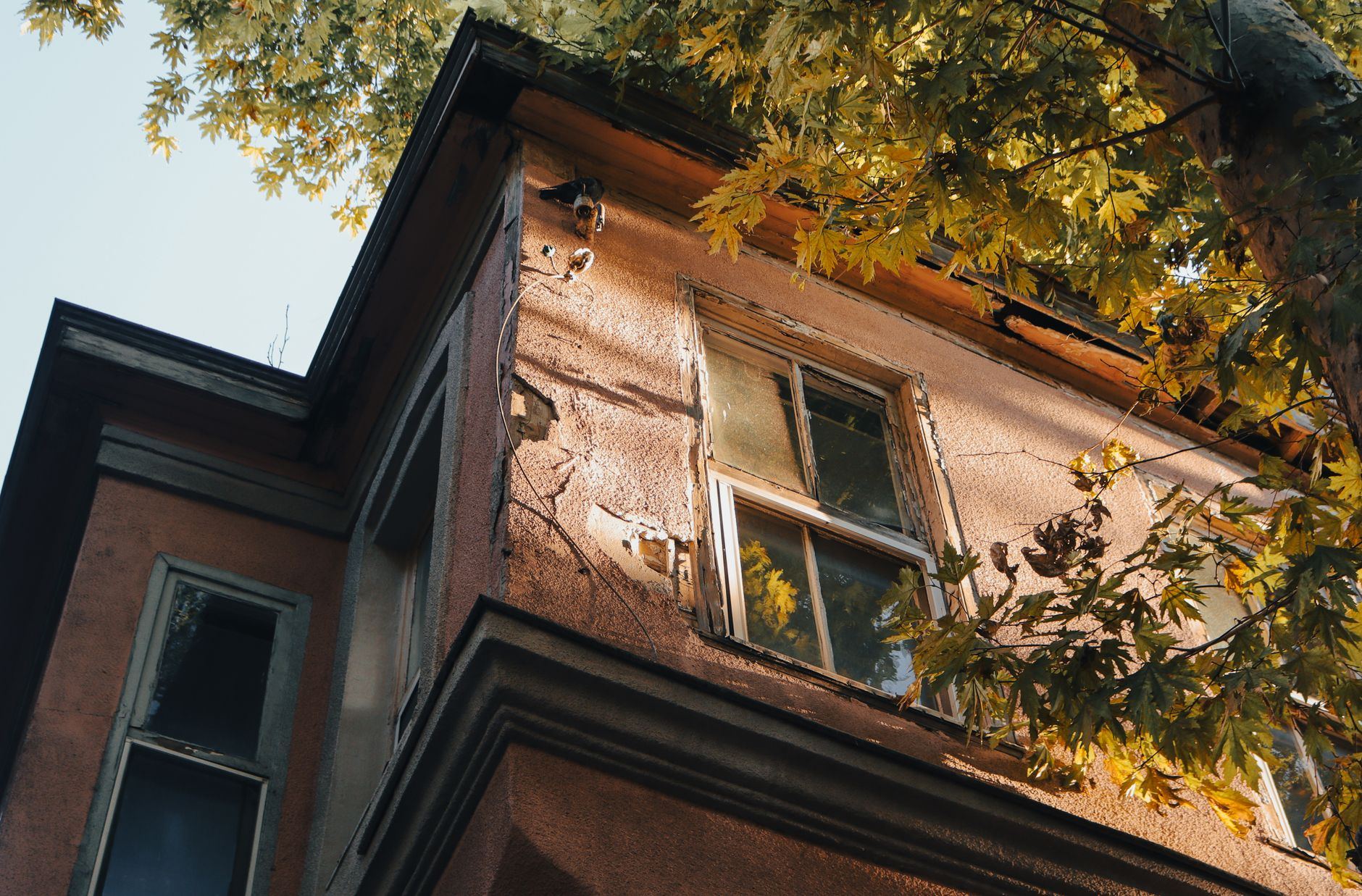
A crack wider at the top than the bottom often points to one end of a wall dropping. On clay, this usually follows a dry spell.
- 2
Doors catching on their frames
A door that sticks only in summer or only on one side suggests the frame has distorted as the wall around it moved slightly.

- 3
Gaps opening under skirting boards
When a floor slab settles away from the wall, a visible gap appears along the bottom edge of the skirting.

- 4
Cracks reopening after plastering
Fresh plaster that splits again along the same line within a few months indicates the movement behind it has not stopped.
Questions about ground movement in Havering
These cover the basics. For anything not listed here, send a description of what you see. Ask something else.
- Why does my neighbour's house have no cracks when mine does?
- Your home and theirs may sit on different soil types, even a few metres apart. One could be on firm gravel while the other is on shrinkable clay or old fill. Tree positions and drain routes also vary house by house.
- How quickly can clay shrinkage damage a wall?
- After several weeks of dry weather, London Clay begins losing volume. Visible cracking can appear within a single summer if a large tree is drawing moisture from the soil near shallow footings.
- Will a cracked wall keep getting worse?
- It depends on the cause. Seasonal clay movement opens and closes cracks each year. A leaking drain washing out gravel causes continuous widening until the leak is repaired.
- Does every house on made ground eventually sink?
- No. Well-compacted fill supports houses indefinitely. But poorly tipped material, or fill containing organic matter that decays over decades, can settle long after the estate was built.
- Can I fix subsidence myself with filler and paint?
- Filling a crack hides it. It does not address the ground beneath the footing. A specialist needs to establish why the movement started before any cosmetic repair makes sense.
- How does a specialist find out what soil is under my house?
- They dig trial holes or bore small diameter probes beside the footings to inspect the soil layers. They also review geological maps and historical land use records for the street.
Tell us what you have noticed at your home
Write down where the cracks are, how wide they get, and when you first saw them. A specialist firm reads your description and advises you on the next step. Sending this does not commit you to any work.
- No obligation to proceed
- Read by a specialist firm
- Advice based on your description