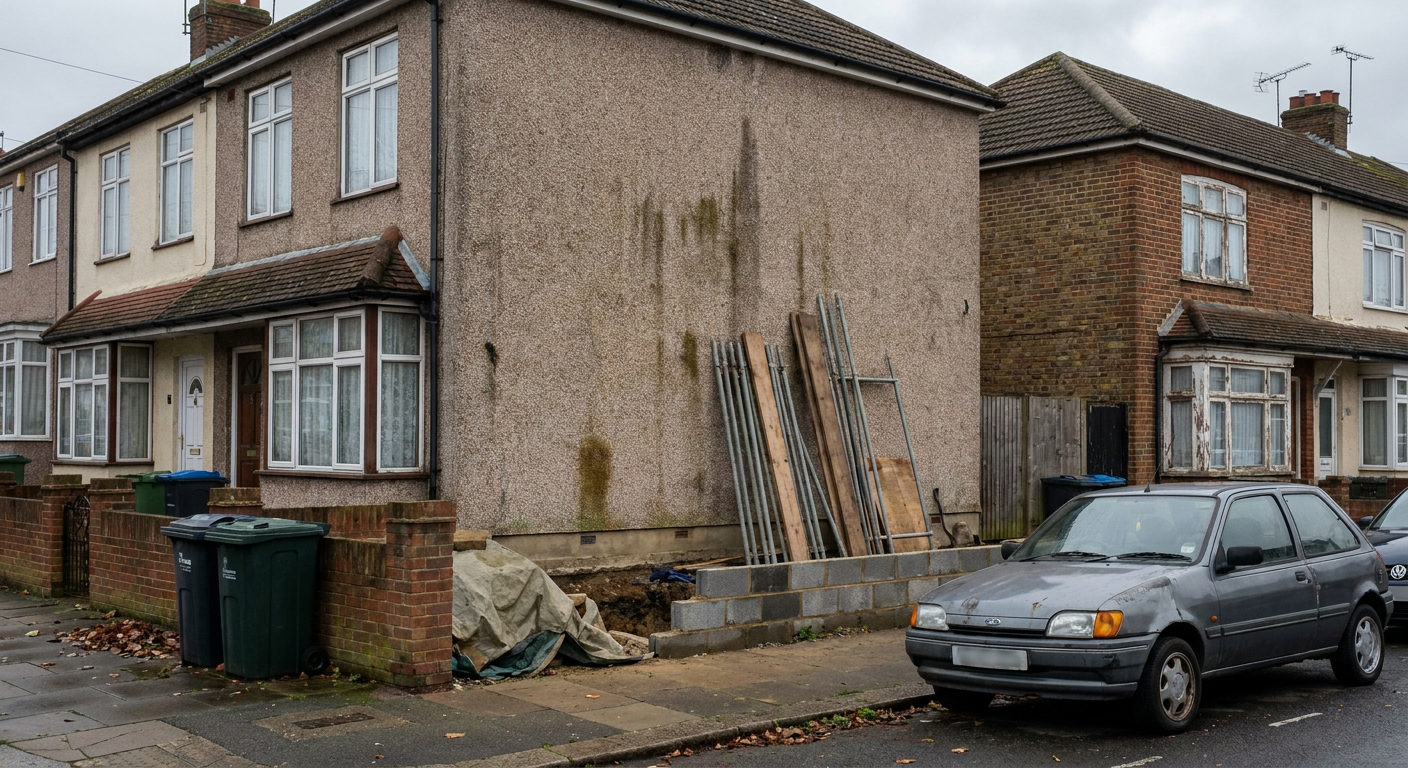
Screw piling in Havering
Screw Piles for Soft Ground and New Extensions
Send the details of your home and the problem you have noticed. A specialist will read them and tell you whether screw piles are the right fix, without charging you anything for that first look.
How they work
Winding Steel Into Firmer Ground Beneath Your Home
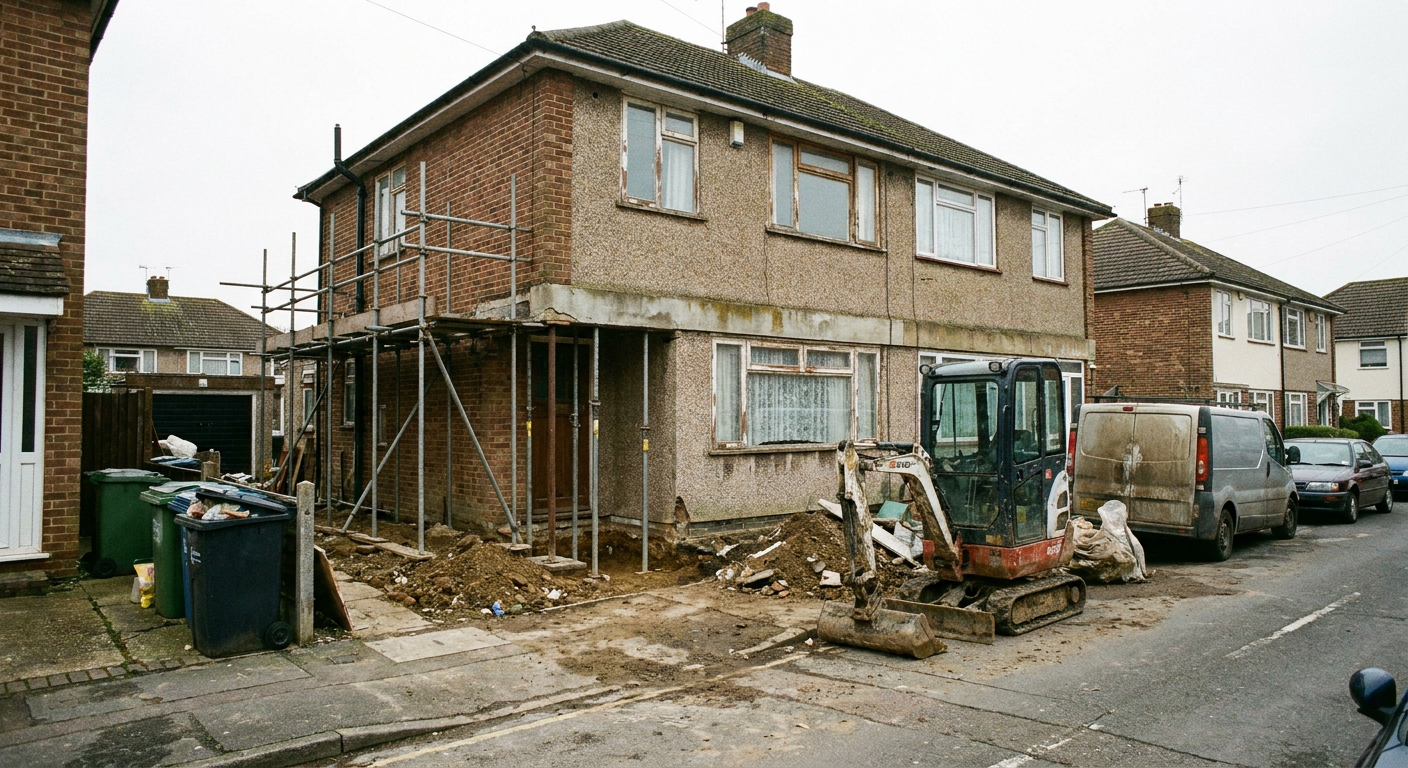
- Extensions on filled or soft ground
- New footings need support that shallow trenches cannot provide. The specialist drives screw piles down to firm strata so the extension sits on something solid rather than compressible fill.
- Stabilising an existing footing
- Where a wall has dropped because the soil beneath it gave way, the specialist installs piles alongside the old foundation and ties them into the concrete with a bracket or beam.
- Working where access is tight
- Small rigs fit through side passages and back gardens. The specialist uses compact equipment to wind piles in without taking down fences or bringing large machinery onto the street.
Why choose screws
When Screw Piles Make Sense
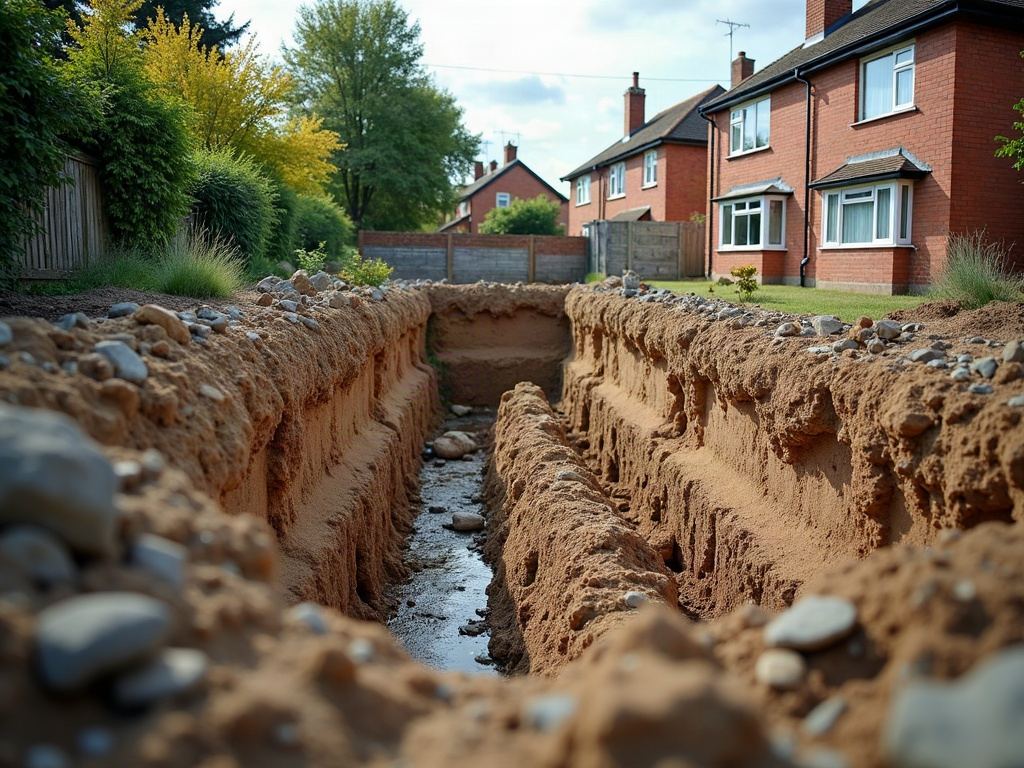
Vibration, space and soil type decide which foundation method a specialist can use. Screw piles suit several situations common in Havering.
- Low vibration needed The steel turns quietly rather than hammering into the earth.
- Tight rear gardens Small machines wind piles into spots where larger rigs cannot fit.
- Made ground below Helical plates grip layers that would collapse around driven piles.
- Immediate loading The footing bears weight immediately, with no curing wait required.
Typical Costs for Screw Pile Work
Depth to firm strata, the number of piles a footing needs and how easily a rig reaches the spot all change the final figure. Tight access or very deep bearing layers push a job toward the higher end of each range.
-
Single pile for a small footing
£800 to £1,500
Depth required and how easily the rig reaches the spot in the garden.
-
Pile group for an extension base
£3,000 to £7,000
Number of piles, the load they must carry and the soil conditions below.
-
Underpinning a dropped wall section
£5,000 to £12,000
Length of wall affected, depth to stable ground and bracket design used.
-
Full perimeter piling for a room
£8,000 to £18,000
Total piles needed, access restrictions and any existing services in the way.
These figures indicate what work of this type typically costs. Nothing here is a quotation. Only a site inspection settles a price for one home.
Checks Before Piles Go In
A specialist follows a set sequence because each check answers a different question. Skipping straight to installation risks placing piles too shallow or missing a leak that will wash out the ground again.
-
Visual survey of cracks and levels
The specialist measures crack widths and checks floor levels to map where movement has happened and whether it is still active.
-
Trial holes or boreholes
Hand-dug pits or machine borings reveal what the soil is made of and how far down the firm bearing layer sits.
-
Drain testing
Water poured into the drainage system shows whether pipes leak. A leaking drain softens the ground and must be fixed first.
-
Load calculation and pile spacing
The specialist calculates the weight the new footing will carry and works out how many piles are needed and how far apart they sit.
If trial holes show rock near the surface, the specialist may recommend a different foundation method entirely.
Questions About Screw Piles
- Will the rig damage my drive?
- Specialists lay track mats or boards to spread the weight. Tell them about block paving or resin surfaces when you describe your home.
- How deep do they go?
- In Havering the firm layer often sits between three and eight metres down, but boreholes confirm the exact depth for each site.
- Can I build straight away?
- Yes. Screw piles take load as soon as they are torqued to the required resistance, so there is no drying or curing delay.
- Do they rust underground?
- The steel is galvanised or painted to resist corrosion. The specialist selects a coating based on the soil chemistry found during the borehole check.
Tell Us What You Have Found
Write down where the cracks are, how wide they measure and anything you know about the soil. That information goes to a specialist who will say whether screw piles are the right approach. It does not commit you to any work.
- No obligation to proceed
- Free initial assessment
- Local specialists only