
Across Havering
What a subsidence specialist looks for in your home
Describe what you have noticed and a specialist will visit your home to examine the ground, the walls and the drains. There is no charge for this first look and no obligation to accept any repair they recommend.
On-site checks
What gets examined before any repair is priced

- Crack patterns in brickwork and plaster
- The width, direction and position of cracks show whether movement is seasonal, ongoing or old. A specialist measures and maps each one across the inside and outside walls.
- Drain runs and soakaway positions
- Broken pipes leak water into the soil beneath footings. The specialist traces where waste pipes run and checks for signs of washing out near the foundations.
- Nearby trees and their root spread
- Large trees extract moisture from clay, causing it to shrink. The species, height and distance from the house determine how much influence the roots have on the ground.
- Soil type and made ground history
- Havering sits on clay, river gravel and old infilled pits. Knowing what is directly under the house tells the specialist how the ground will behave in wet and dry weather.
- Concrete floors and garage slabs
- Slab floors move differently from strip foundations. The specialist checks for hollow spots, tilting and cracking that point to loss of support underneath the concrete.
Reading the signs
Why the cause matters more than the crack itself
A crack above a window might be a lintel failing rather than subsidence. Repairing the wrong thing wastes money and leaves the real problem active under the house.
Sticking doors happen when frames twist out of square. The specialist checks which way the frame has tilted to work out which part of the foundation has dropped.
Seasonal cracks open in summer and close in winter as clay shrinks and swells. Monitoring over months tells the specialist whether the movement is within normal limits or getting worse.
Water escaping from a cracked drain softens the soil locally. Finding the leak stops further movement so the repair only needs to address the damage already done.
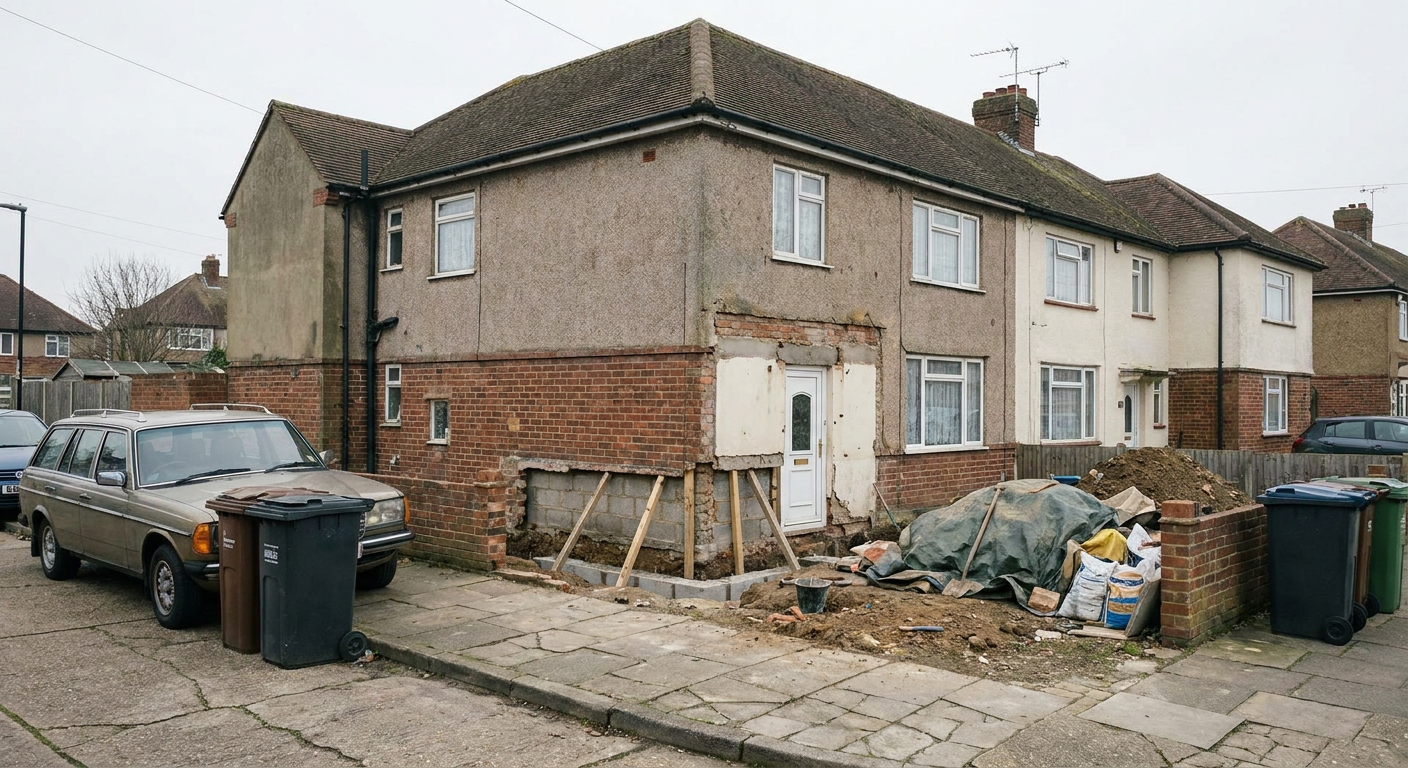
From your first message to the site visit
01
You describe the problem
Write down what you have seen: where the cracks are, when they appeared, and whether doors or windows have started sticking.
02
A specialist arranges a visit
Someone who deals with ground movement in Havering agrees a time to come and look at your home.
03
They examine the house and ground
The specialist checks walls, floors, drains and nearby trees, taking measurements and photographs as evidence.
04
You receive written findings
After the visit, you get a report setting out what they found, what it means, and what should happen next.
What you hold after the visit
The specialist records what they measured, photographed and concluded. You receive a written account of the condition of your home and the ground beneath it, so you can decide what to do next without guessing.
Site inspection report
A written record of every crack measured, drain checked and tree noted during the visit, with photographs showing the current condition.
Cause assessment
The specialist states what they believe is causing the movement, based on the soil type, drainage layout and crack pattern.
Recommended next steps
Clear options for what should happen next, whether that means monitoring the cracks over several months or starting a specific repair.
Questions people ask before booking a visit
How do I know if a crack means subsidence?
Most houses develop small cracks as materials age and settle. Subsidence cracks tend to be wider than three millimetres, run diagonally through bricks rather than just mortar, and appear suddenly or widen noticeably over weeks. A specialist reads the pattern to confirm the cause.
Will my insurance cover the investigation?
Many buildings policies include subsidence investigations, but you need to check your own terms before calling your insurer. The specialist works independently of any insurance company, so their report reflects what they find in your home rather than what a policy covers.
Does the visit mean I have to get underpinning?
No. Underpinning is one method used when foundations need deeper support. Many cases involve repairing a leaking drain or managing nearby trees instead. The specialist recommends only what the evidence from your home supports.
How long does the site visit take?
A typical visit lasts between one and two hours for a standard house. Larger homes or properties with complex drain layouts take longer. The specialist needs enough time to measure every affected wall and trace the drainage paths.
Can tree roots really pull the ground away from my house?
Certain trees, especially oaks, willows and poplars, draw large amounts of moisture from clay soil during summer. If planted too close to older shallow foundations, this drying causes the clay to shrink and the footing to drop. Removing the tree without advice can also cause problems.
Tell us what you have noticed
Send a short description of the cracks or movement you have seen. A specialist will read it and contact you to arrange a visit. This does not commit you to any repair work or cost anything upfront.
- No charge for the visit
- No obligation to proceed
- Local to Havering