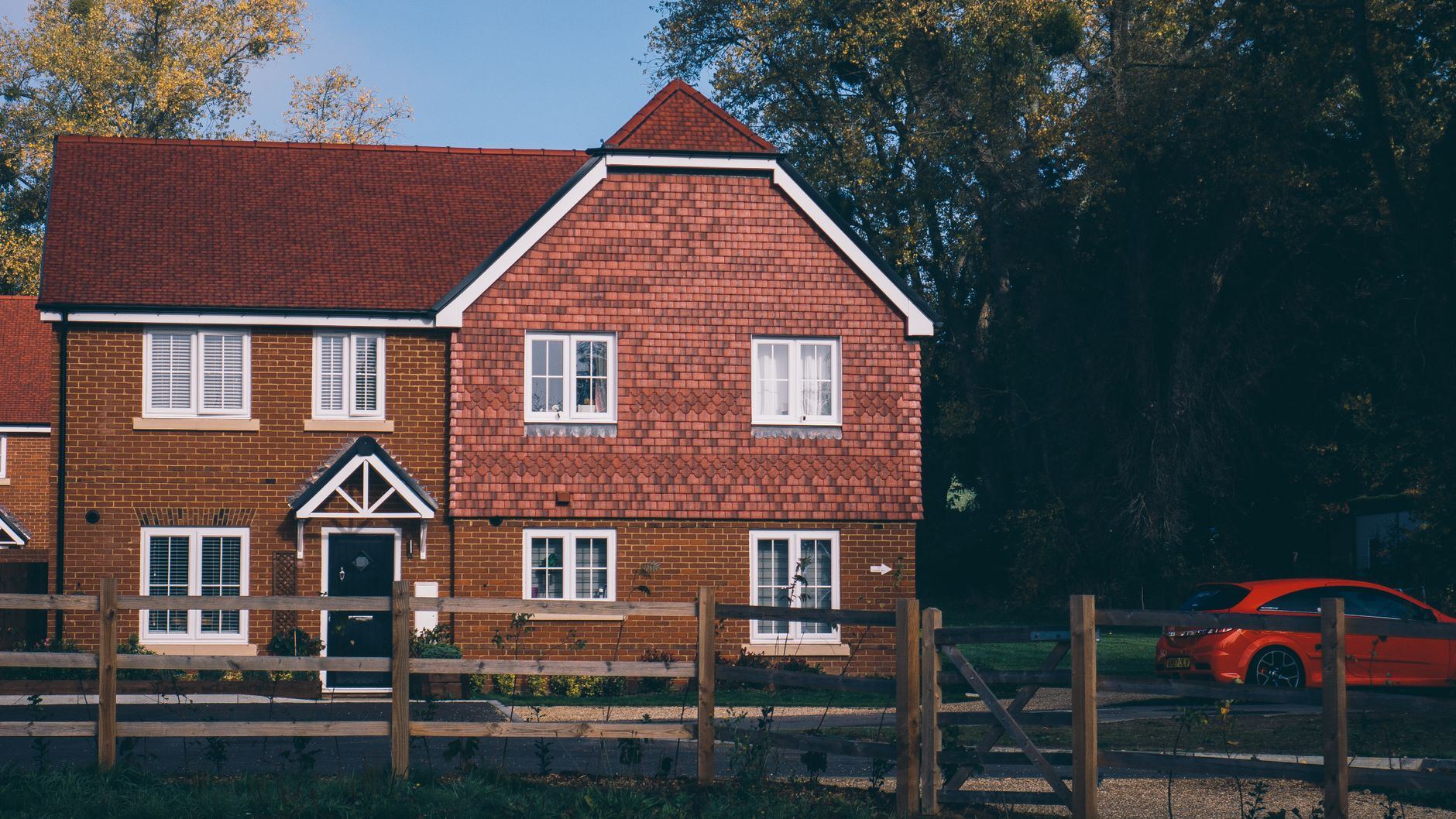
South and west Havering
Built on filled ground in south and west Havering
Describe what you have noticed at home. A specialist firm will read the details and tell you whether the ground beneath your house needs investigation, with no cost or obligation to you.
Where the ground was dug out and filled back in
Along the Thames and the Ingrebourne, gravel and ballast were extracted for decades. The pits left behind were filled with whatever was available: rubble, ash, clay dug from nearby, sometimes household waste. Around Hornchurch and Rainham, former airfields and industrial works were levelled and built over after the war. The fill was rarely compacted to a standard that would support a house evenly.
Natural ground settles over centuries. Made ground settles over years, and it does so unevenly. One part of a footing might rest on solid river terrace gravel while another sits on loose tipped material. That difference is what causes movement. Houses built on this land in the 1950s and 1960s are now old enough for the fill to have compressed significantly, but not always uniformly.
The borough boundary matters here because the geology changes fast. Move north towards Romford and the ground is largely London Clay. Stay south and west, near the marshes and the river, and the history of extraction dominates. Knowing which parish your home sits in tells a specialist where to start looking.
How variable fill behaves under a house
Fill material is inconsistent by nature. A load of brick rubble compresses differently from a layer of sandy loam. When both sit under the same strip footing, the foundation bears weight unevenly. Over time the softer pockets compress more, and the wall above begins to rotate or drop.
This is distinct from clay shrinkage. Clay moves with moisture: wet winters swell it, dry summers shrink it. Fill moves because it was never dense enough to begin with, or because water running through it washes fine particles away. Both mechanisms can operate together if a house sits on fill overlying clay, which is common along the Ingrebourne valley.
A crack caused by consolidating fill often runs diagonally from a corner, widening as it rises. But cracks alone do not prove the cause. The pattern has to be read alongside the soil type, the age of the building, and any history of drainage leaks. A structural engineer working for the specialist firm will weigh all three before naming a cause.
Proving what is underneath the concrete
You cannot see fill from the surface. A specialist proves its depth and composition by digging trial holes or driving boreholes through the foundations into the ground below. Each layer is logged. The engineer records where made ground ends and natural strata begin, and takes samples for laboratory testing.
Dynamic probe tests measure resistance at set depths. A steel rod is driven into the ground by a falling weight, and the number of blows per metre indicates how dense the material is. Loose fill returns low blow counts; compact gravel returns high ones. This data produces a profile of stiffness directly beneath the footing.
Ground-penetrating radar can map voids or changes in material without digging, though it struggles in wet clay. The choice of method depends on access, the suspected problem, and the type of construction. Once the depth and quality of the fill are known, the specialist can determine whether the existing foundations are adequate or need support taken down to firmer ground.
What happens when the ground is proven to be weak
If the investigation shows loose fill extending below the current footings, the specialist firm will recommend a way to bypass it. Underpinning digs out sections of weak material in controlled bays and pours new concrete down to a competent layer. This is slow, disruptive work, but it addresses the root cause directly.
Screw piling offers an alternative where access allows. Steel helical piles are wound into the ground until they reach sufficient torque, transferring the building load past the fill entirely. This avoids large excavations and suits extensions or outbuildings on uncertain ground.
Resin injection is generally used for clay shrinkage rather than deep fill consolidation, because resin expands within a defined zone and cannot replace missing bulk material. If a cracked slab or drive sits on shallow fill, the specialist may recommend lifting and relaying it rather than treating the ground beneath. The right method depends entirely on what the investigation found, so proving the ground comes first.
Signs your home might be sitting on loose fill
Made ground compresses unevenly. When the material beneath a footing is weaker in one place than another, the wall above drops or tilts. These are the things you might notice inside or outside your home.
- 1
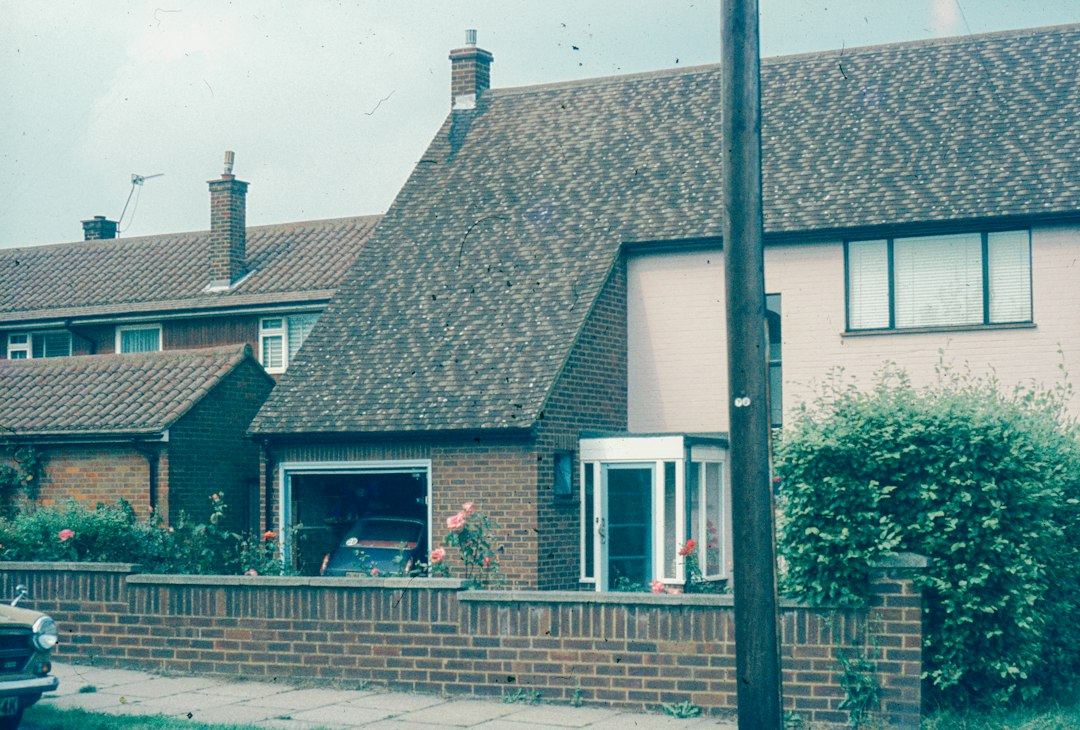
Diagonal cracks near corners
A crack wider at the top than the bottom, stepping through mortar joints, can indicate one side of the wall dropping relative to the other.
- 2
Doors catching on frames
If a door that used to close freely now binds at the top or scrapes the threshold, the frame may have distorted because the wall moved.

- 3
Gaps under skirting boards
A visible gap between the floor and the skirting suggests the floor slab has settled away from the walls, common where fill compresses.

- 4
Cracked concrete drives or paths
Slabs laid directly on fill often split as the ground beneath them consolidates, especially near the edges where loads concentrate.

Questions about building on filled ground
How do I know if my house is built on fill?
Check old Ordnance Survey maps at the local library or online. Gravel pits, marshland and airfields marked on pre-war maps that later show housing indicate made ground. A specialist confirms this physically with trial holes.
Will my buildings insurer cover subsidence on fill?
Most policies cover subsidence regardless of cause, but you must notify the insurer before commissioning investigations. They usually appoint their own engineers. Check your policy wording for specific exclusions around known made ground.
Can trees make fill settlement worse?
Trees draw moisture from clay but do not compact loose fill. However, roots can penetrate poorly laid drains, causing leaks that wash fine particles out of the fill. So vegetation plays an indirect role.
Is underpinning always needed on made ground?
No. If the fill has fully consolidated and movement has stopped, monitoring may be enough. Underpinning is required only when ongoing settlement threatens the structure or when loads increase through extension work.
How long does a ground investigation take?
Trial holes can be dug and logged in a single day. Laboratory results for soil samples typically take one to two weeks. The full report follows shortly after, depending on the complexity of the site.
Tell us what you have noticed at home
Send a description of the cracks or movement you have seen. A specialist firm will review the details and advise whether the ground warrants investigation. There is no fee for this initial assessment.
- No obligation to proceed
- Free initial assessment
- Local specialists