Trees and clay
When a tree near your home dries the clay beneath it
Send details of the cracking you have noticed. A specialist firm will review what you describe and tell you whether the trees or hedges near your home could be drying the clay under your walls. There is no charge for this.
Why Havering gardens hold large, established trees
Many streets in Havering were built over farmland, market gardens and orchards during the middle decades of the twentieth century. Developers kept mature hedgerow oaks, field boundaries and fruit trees because they gave new estates an immediate sense of place. So homes that look modern often sit next to trees that are much older than the brickwork.
Those trees grew in open fields where their roots spread without meeting foundations or drains. Once houses surrounded them, the same root systems began drawing moisture from the clay directly beneath footings. London Clay shrinks as it dries, and a single mature oak can extract thousands of litres of water from the soil each summer. The closer the trunk stands to a wall, the more direct its effect on the ground supporting that wall.
Knowing this history matters when cracks appear. A tree causing movement today may have been planted before the estate existed. Understanding where it came from helps determine what should happen next.
Distance, species and how much water a tree takes
Not every tree near a house causes subsidence. The risk depends on three things: how far the trunk stands from the wall, what species it is, and how much water it demands. Oaks, poplars and willows draw heavily from the soil. Birches and most fruit trees take far less.
A rough guide used by structural engineers relates the mature height of a tree to its likely influence on clay. High-demand species can affect ground at a distance equal to their full height, while low-demand trees rarely cause problems beyond half their height. But these are starting points, not rules. Soil type, drainage, rainfall and the depth of the foundations all change the picture.
Hedgerows complicate matters further. A line of mixed planting left from a field boundary behaves differently from a single specimen tree. Roots overlap, creating a broad zone of dried soil rather than a single point of extraction. A specialist surveyor maps each stem and measures distances before any planting is blamed for movement.
What a specialist checks before anything is cut down
Removing a large tree is permanent and sometimes makes the problem worse. If clay has already dried and shrunk, felling the tree allows it to reabsorb rainwater and swell. That swelling can lift foundations unevenly, causing fresh damage known as heave. So cutting something down is never the automatic first step.
Before recommending removal, a specialist firm investigates the ground. They dig trial holes beside the foundation to check its depth and condition. They take soil samples to measure moisture content and confirm the clay is shrinking. Root identification tests can prove whether roots found near a footing belong to the suspected tree or another source entirely.
Drainage surveys run alongside this work. A leaking pipe washes fine particles out of the ground and mimics the effects of root-induced drying. Until drains are proved sound, blaming a tree remains premature. Only when the evidence points clearly at root activity does the discussion turn to pruning, root barriers or removal.
How foundation repair works around existing planting
If a tree must stay, perhaps because of a preservation order or its value to the garden, foundation work can proceed around it. Underpinning strengthens the footing so it bridges the zone of seasonal shrinkage. Resin injection stabilises clay that has already lost volume, filling voids left by dry seasons.
Screw piling offers another route. Steel piles driven past the shrinking layer reach stable ground below the depth roots can affect. This approach suits extensions and outbuildings sited close to retained trees, where traditional concrete trenches would sit inside the active root zone.
The choice between these methods depends on what the investigation finds. A specialist firm reviews the soil data, the crack pattern and the layout of the home before proposing a fix. The aim is always to stabilise the structure while keeping the tree alive, provided the evidence shows that doing so is safe.
Signs a nearby tree might be drying your foundations
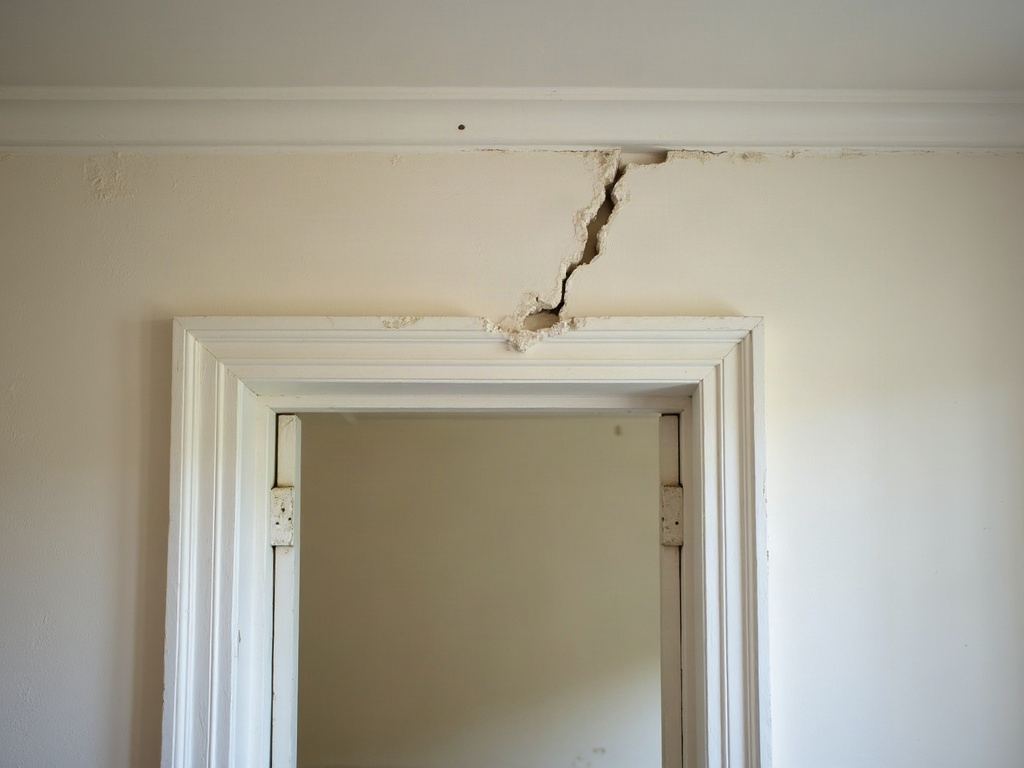
Large trees and dense hedge lines pull moisture from clay soil. In dry months the ground shrinks and foundations move. Cracks follow, usually appearing in patterns that differ from normal settling.
- 1
Cracks wider at the top
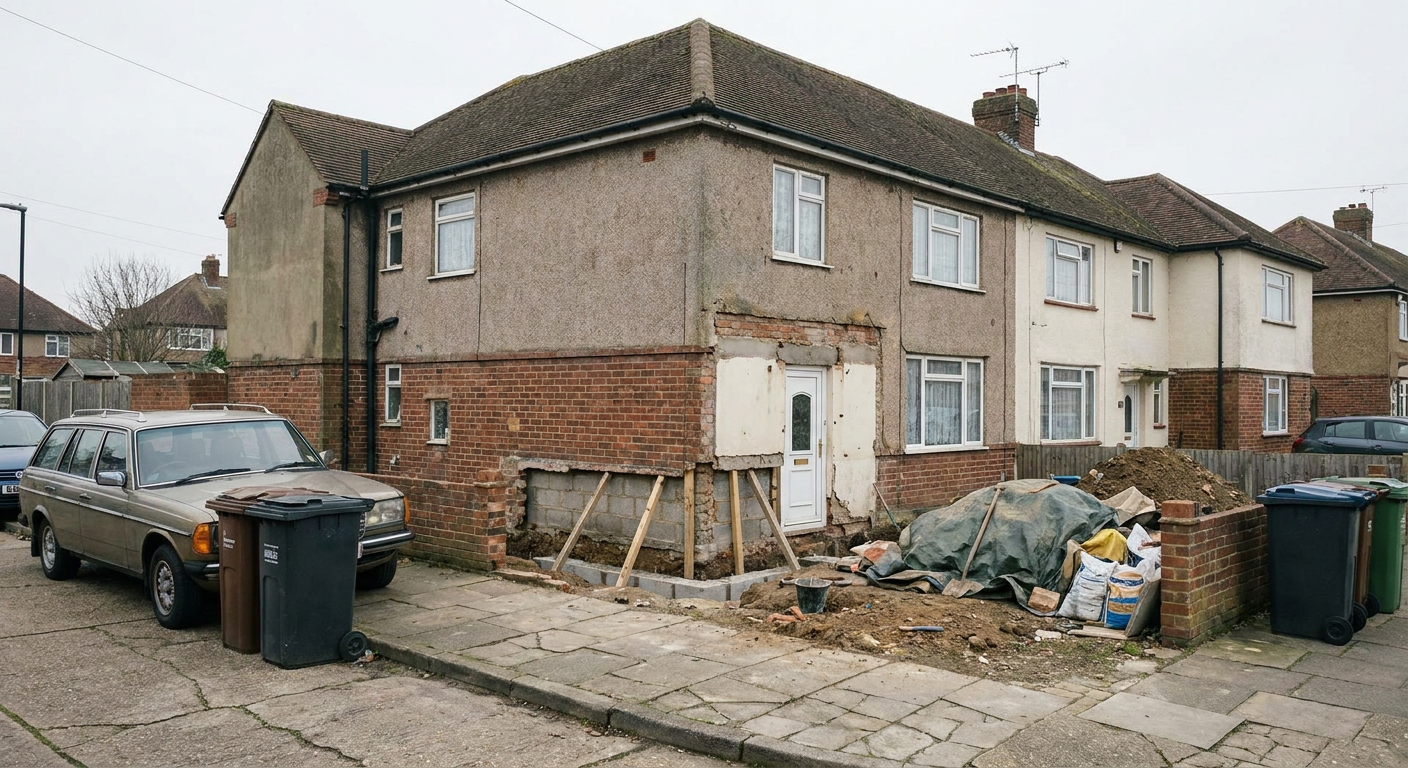
A tapering crack in brickwork often means one end of the wall has dropped. Check whether a large tree stands near the wider end.
- 2
Doors catching on frames
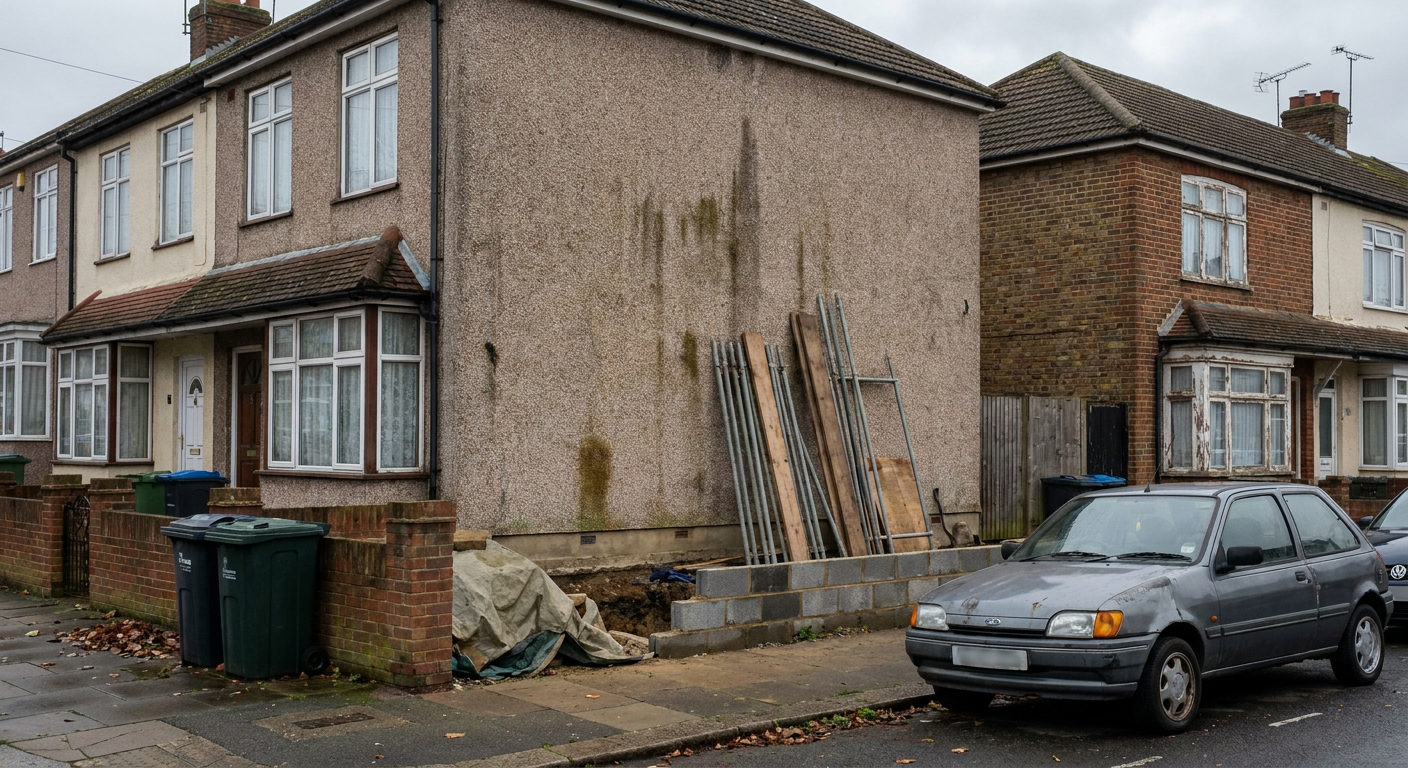
Sticking doors suggest the frame has distorted. Seasonal sticking that worsens in late summer can point to clay drying out nearby.
- 3
Gaps opening at skirting boards
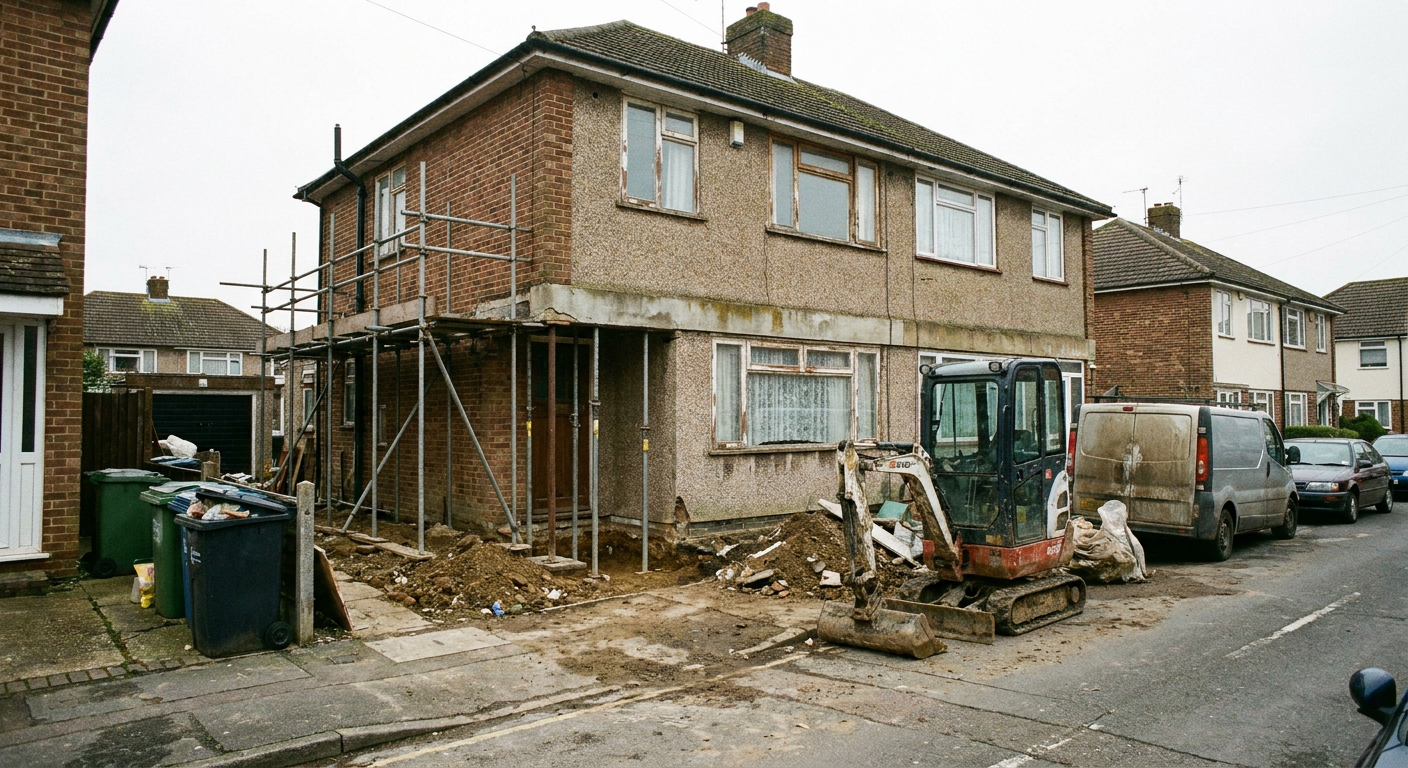
Floors dropping away from walls leave visible gaps. This happens when the ground under the floor slab loses moisture and sinks.
- 4
Diagonal cracks near corners
Corners concentrate stress when foundations move. A diagonal crack running from a window corner toward the ground warrants attention.
Trees, hedges and clay questions
- Can a hedge cause subsidence?
- Dense hedge lines with deep-rooted species like privet or hawthorn can dry clay across a wide strip, affecting shallow foundations.
- Should I cut the tree down myself?
- No. Felling a tree near damaged foundations can trigger heave. A specialist firm must assess the ground before any removal.
- How close is too close?
- It depends on the species and mature height. Oak and willow influence clay further than birch or apple trees.
- Will my insurer require tree removal?
- Insurers rely on evidence. Root analysis, soil testing and drain surveys must support removal before they authorise it.
- Can resin injection work near roots?
- Yes. Resin stabilises dried clay without excavation, making it suitable where root networks make digging impractical.
Tell us what you have noticed near your home
Send a description of the cracks and the trees or hedges standing close to your walls. A specialist firm will review the details and advise you on the next steps. Nothing you send commits you to any work or cost.
- No obligation
- Free initial review
- Local specialists