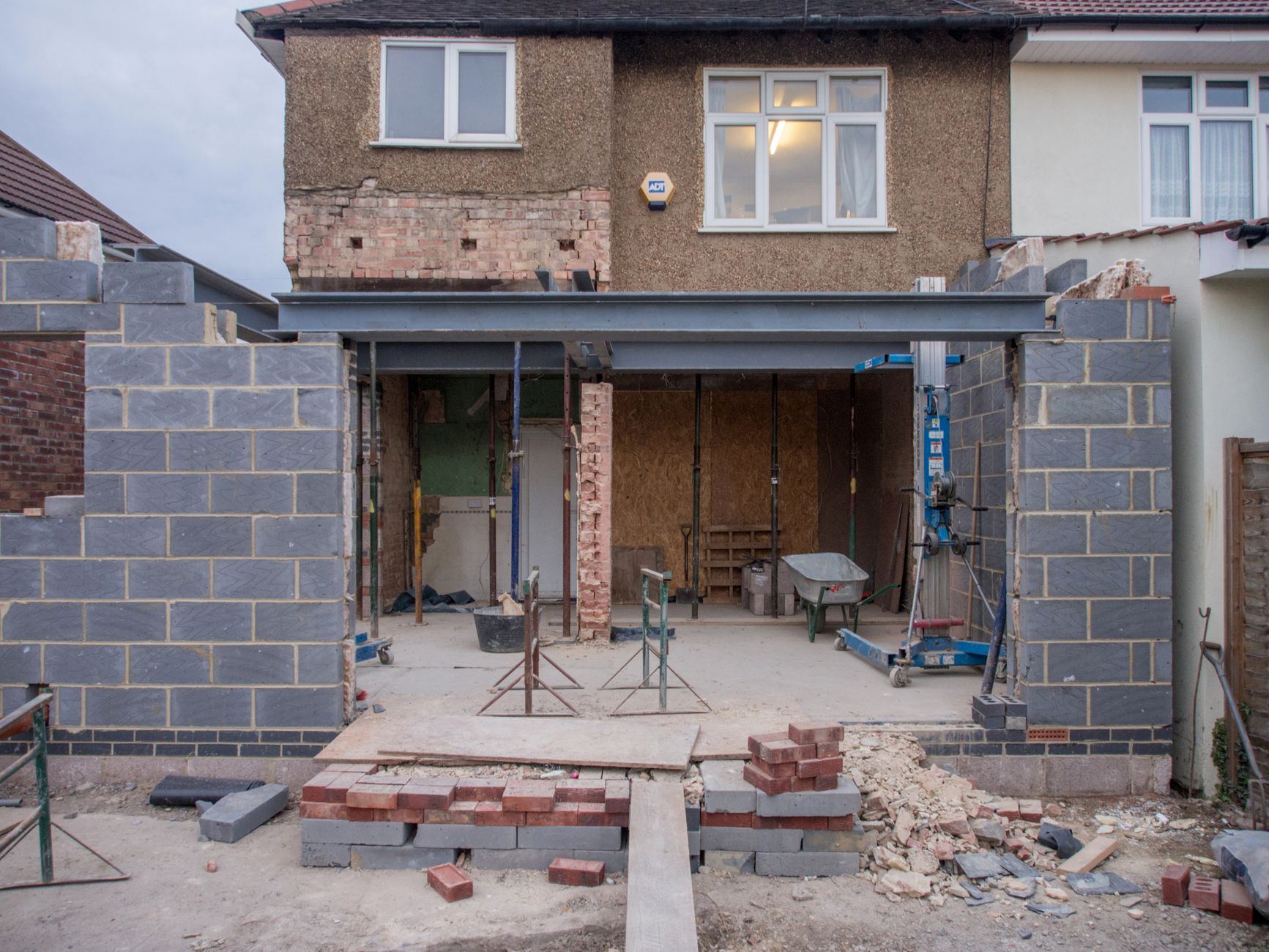
Underpinning in Havering
When a crack means the ground needs underpinning
Send details of what you have noticed and a specialist will arrange to look at your home. There is no charge for the enquiry and no obligation to accept any advice or work that follows.
The three methods
How foundations are supported
- Mass concrete underpinning
- Sections of earth are dug out beneath the existing footing in short bays and filled with concrete. The work moves along the wall so the house stays supported while each bay cures.
- Beam and base
- A reinforced concrete beam is cast below the current footing. Concrete bases placed at intervals carry the load down to firmer soil, spreading the weight more evenly than mass concrete alone.
- Piled underpinning
- Steel or concrete piles are driven or bored through weak ground until they reach a load-bearing stratum. A reinforced beam then transfers the wall load onto the piles.
Reading the signs
Why the symptom does not decide the method
A crack near a window tells you something has moved. It does not tell you how deep the problem goes or which repair suits the ground beneath your home.
- Soil type dictates the approach London Clay shrinks when dry and swells when wet. River gravel near Rainham behaves differently again. The specialist tests the soil before choosing a repair because clay and gravel demand different fixes.
- Depth of the existing footing Older homes often sit on shallow brick footings. Postwar estates may have thin concrete strips. How far down solid ground lies determines whether digging out or piling makes sense.
- Drains and water movement A leaking drain washes fine particles out of the soil and leaves voids. Repairing the pipe must happen before any foundation work begins, or the ground will keep moving.
- Trees drawing moisture Roots from oaks and willows pull water from clay over a wide radius. Removing the tree without understanding the soil can cause heave, so the specialist assesses root spread first.

Typical costs for foundation repairs
Foundation work varies because every home sits on different ground. The length of wall affected, how deep stable soil lies, access for machinery and whether drains need repair all shift the final figure within these ranges.
-
Resin injection into clay
£1,500 to £4,000
Volume of resin needed and how many injection points the specialist must drill to fill the voids.
-
Concrete floor slab repair
£2,000 to £6,000
Area of the slab, whether reinforcement is required and if drainage underneath needs attention first.
-
Screw piling for an extension
£4,000 to £9,000
Number of piles, their depth to reach firm ground and the size of the steel caps welded on top.
-
Mass concrete underpinning
£12,000 to £30,000
Length of wall treated, depth of excavation and whether spoil must be removed by hand due to tight access.
-
Beam and base underpinning
£15,000 to £40,000
Spacing of the bases, steel reinforcement required and the complexity of working around existing services.
-
Piled underpinning
£20,000 to £55,000
Depth to a load-bearing layer, pile diameter chosen and whether a rig can reach the site easily.
These figures indicate what work of this type typically costs. Nothing here is a quotation. Only an inspection by a specialist can settle a price for one home.
What happens next
From first look to finished repair
A structural engineer or foundation contractor visits the home to measure cracks, check levels with surveying equipment and take soil samples where necessary.
They review the findings against building regulations and produce a specification detailing the method, dimensions and sequence of work required to stabilise the structure.
Specialist plant arrives on site. The crew works in planned stages, supporting the walls while new concrete or piles take the load permanently.
Monitoring pins are set into the walls so movement can be tracked over the following months. The specialist returns to confirm the repair has held before signing off.
Questions homeowners ask about underpinning
Worry grows when the word underpinning comes up. These answers cover what people most want to know before anyone looks at their home.
- Will I have to move out?
- Most underpinning work happens from the outside. You can usually stay in your home unless internal floors need lifting or extensive propping is required inside.
- Does it stop cracks appearing?
- Stabilising the foundation stops further movement caused by the original problem. Existing cracks still need filling and redecorating once the structure has settled fully.
- How long does the work take?
- A short section of mass concrete might take two weeks. Piling across a full elevation can run to six weeks or more depending on ground conditions and weather.
- Can trees cause the problem?
- Yes. Roots extract moisture from clay, causing it to shrink. But felling a mature tree without professional guidance risks the clay swelling back and pushing the walls upward.
- Is resin injection the same thing?
- No. Resin fills voids and compacts loose soil beneath a footing. Underpinning replaces or extends the physical support. A specialist decides which suits the fault found.
Tell us what you have noticed
Leave a description of the cracks or movement you see. A foundation specialist will read it and arrange to visit your home. Sending this form does not commit you to any work or payment.
- No obligation
- Free initial enquiry
- Local specialists