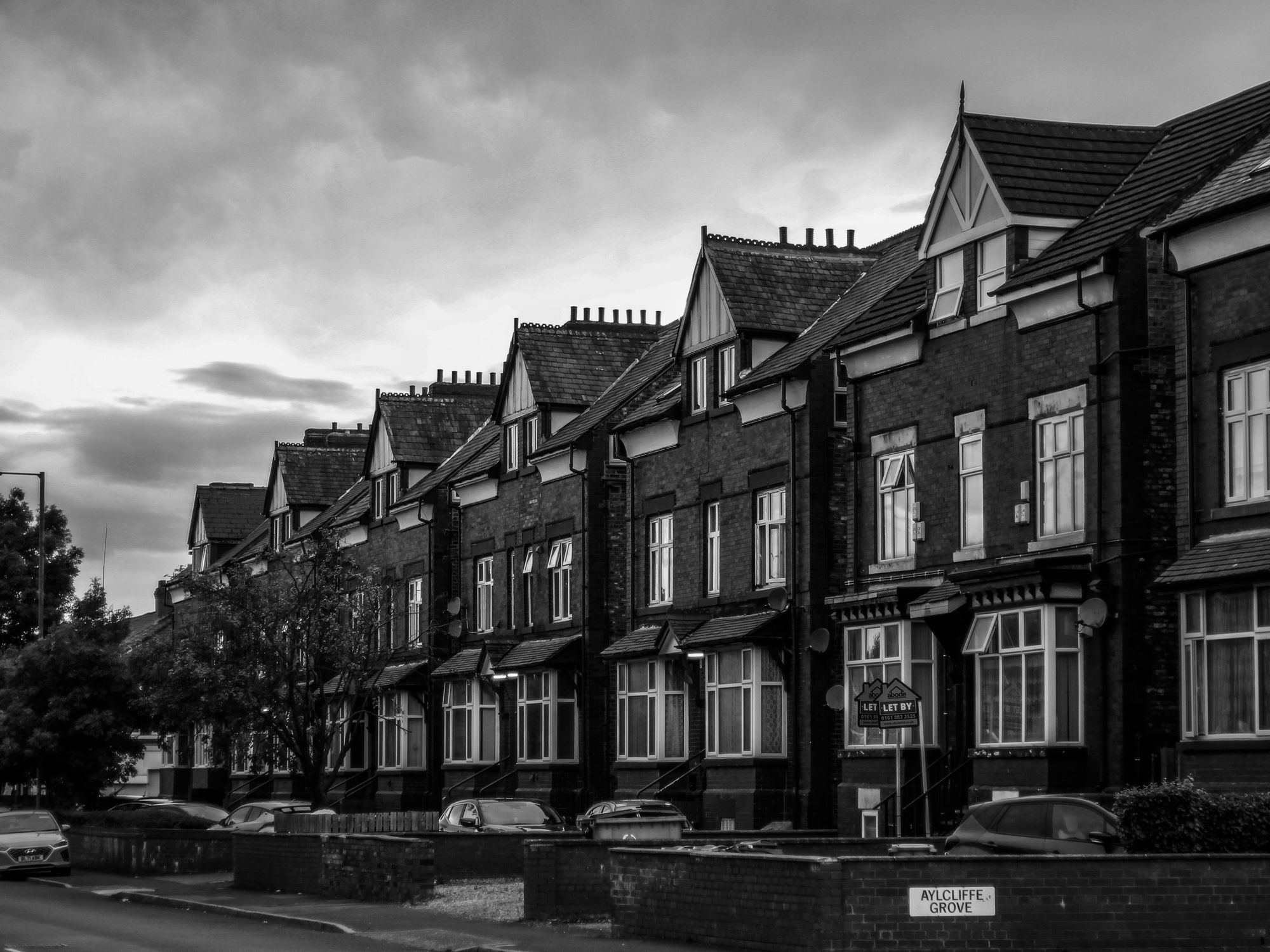
Romford homes
Subsidence and foundation help for Romford
Describe what you have noticed at your home. A specialist covering Romford will read the details, assess whether the movement needs attention, and reply with advice. There is no charge for sending this in.
Cracks opening up around your Romford home
Movement shows itself slowly. Plaster splits, doors start to catch, and gaps appear where walls meet ceilings. In Romford, London Clay shrinks in dry weather and swells when wet, shifting shallow footings built decades ago.
- 1
Diagonal cracks near windows
A crack wider at one end than the other, running from a window corner toward the ceiling. It often points to uneven settlement below.
- 2
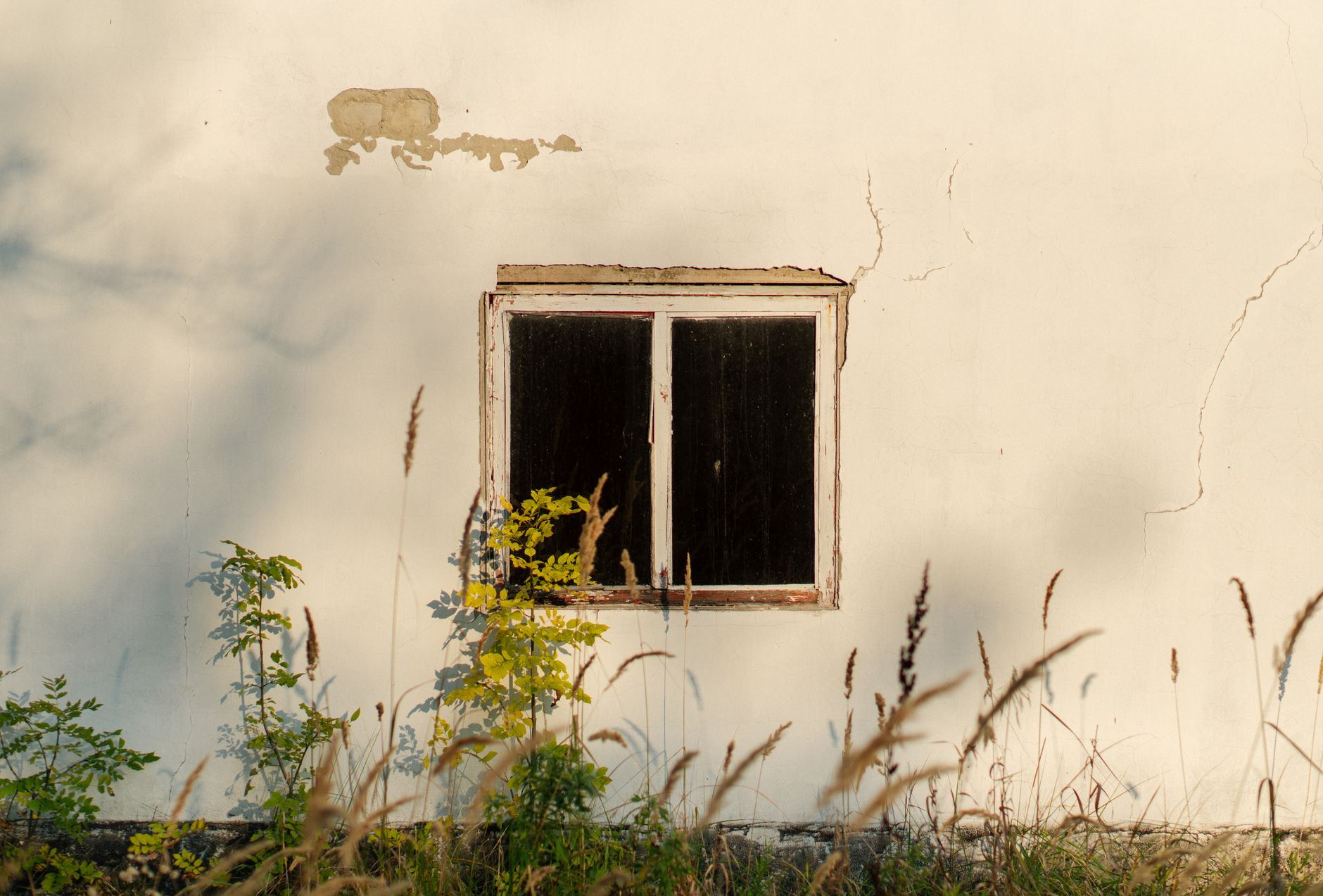
Doors that stick or drag
Frames twist slightly when the wall moves. A door that used to close easily now catches on the paint or the carpet.
- 3
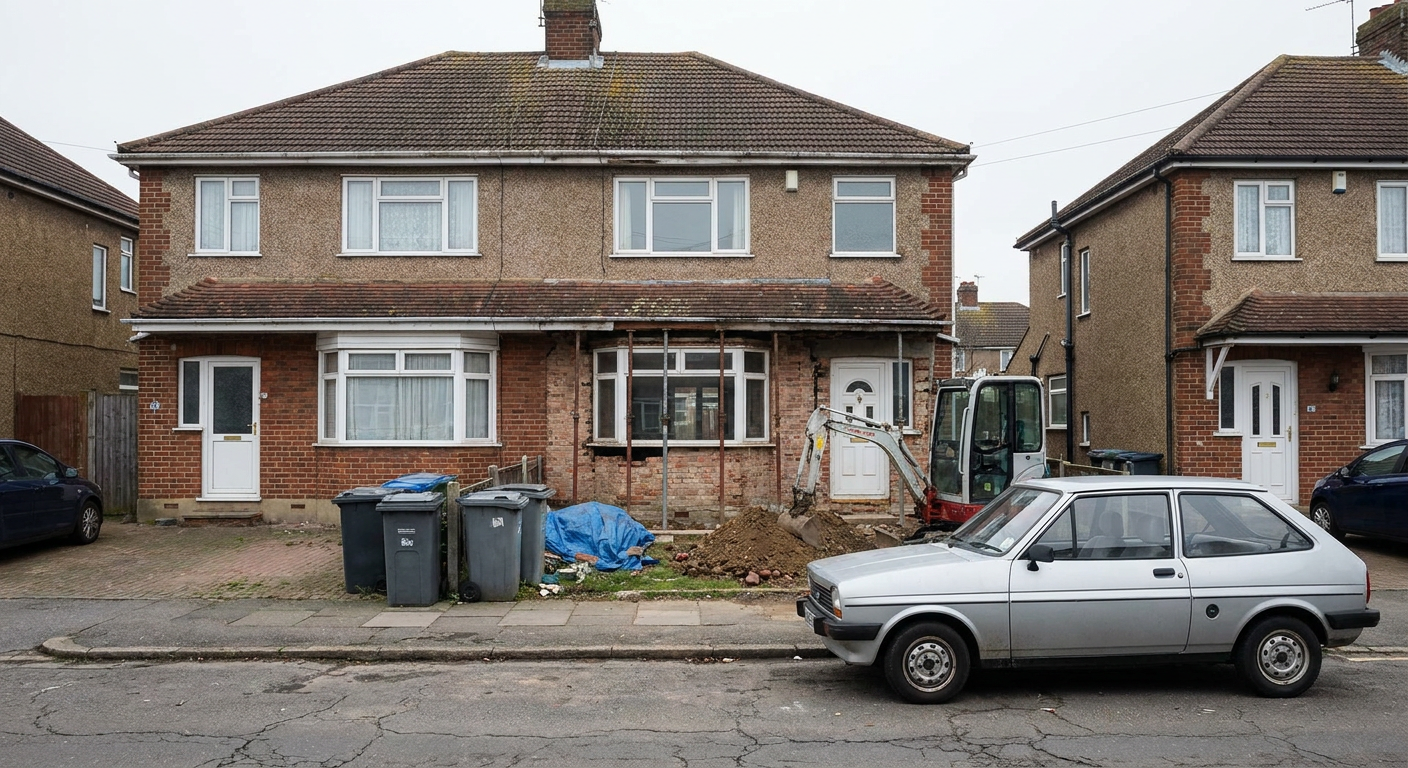
Gaps along skirting boards
The wall lifts away from the floor timber, leaving a visible line. This happens when foundations settle at different rates.
- 4
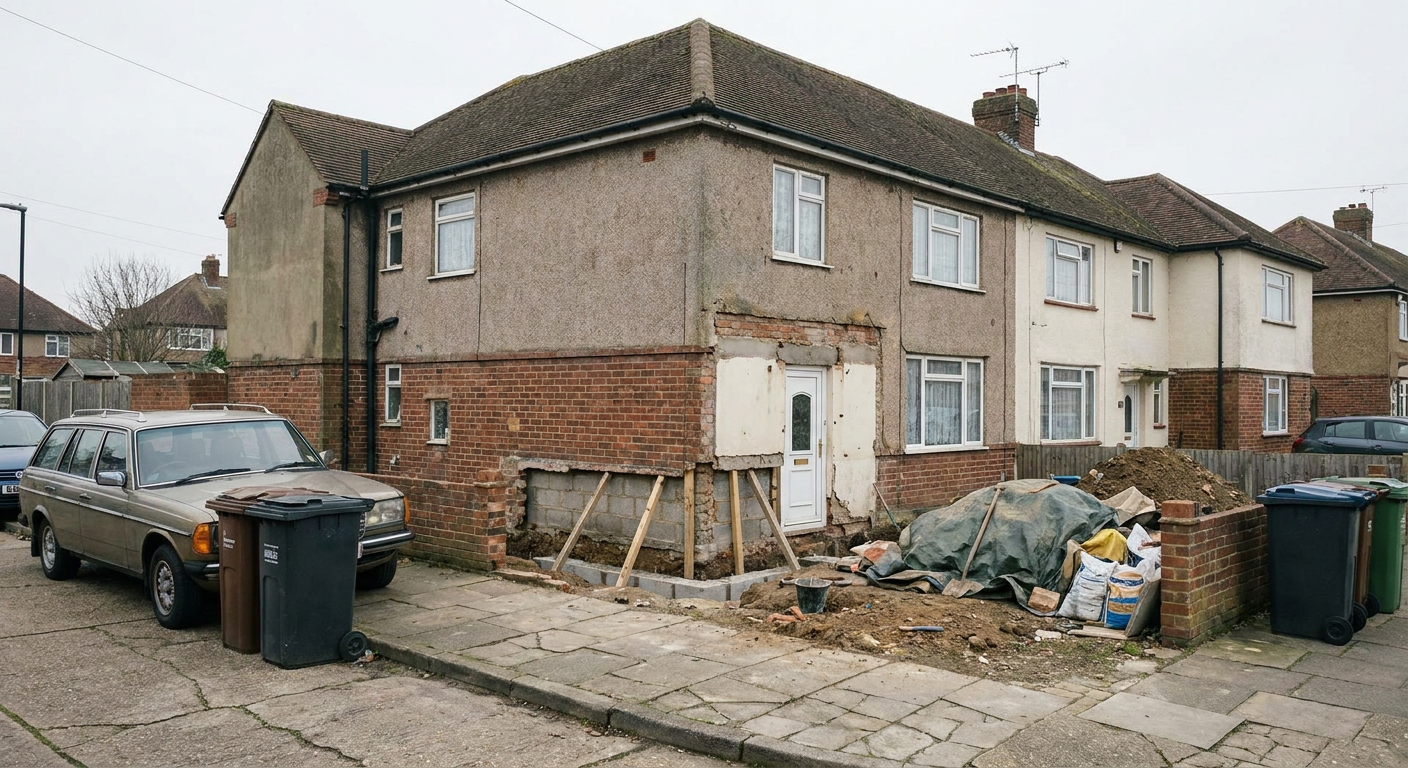
Ripples in exterior brickwork
Mortar joints step up or down in a stair pattern. On older terraces near the market, this can follow years of clay movement.
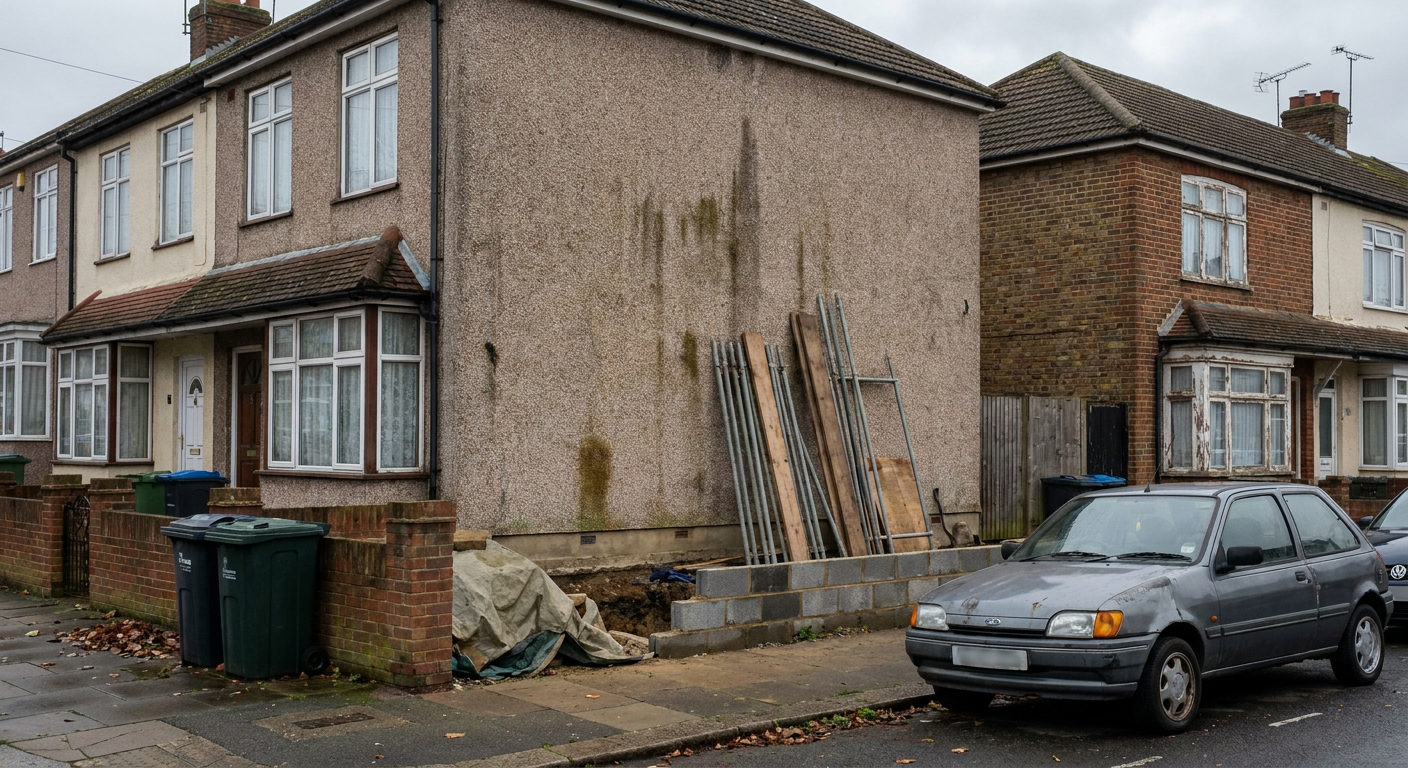
Romford geology
Why Romford houses move
Much of the town sits on London Clay. During long dry spells the soil loses moisture and contracts. When heavy rain returns it swells again. Houses built on shallow Victorian footings ride these changes directly.
Near the River Rom, older properties stand on river gravel over clay. Water washing through the gravel can leave voids beneath footings, particularly where drains have leaked for years without anyone noticing.
Postwar estates around the town used concrete slab floors laid straight onto compacted ground. If the fill material was loose or the water table shifted, those slabs crack and sink independently of the outer walls.
Many streets still have mature trees planted close to the house. Roots extract large volumes of water from the clay during summer, causing localised shrinkage right under the nearest footing.
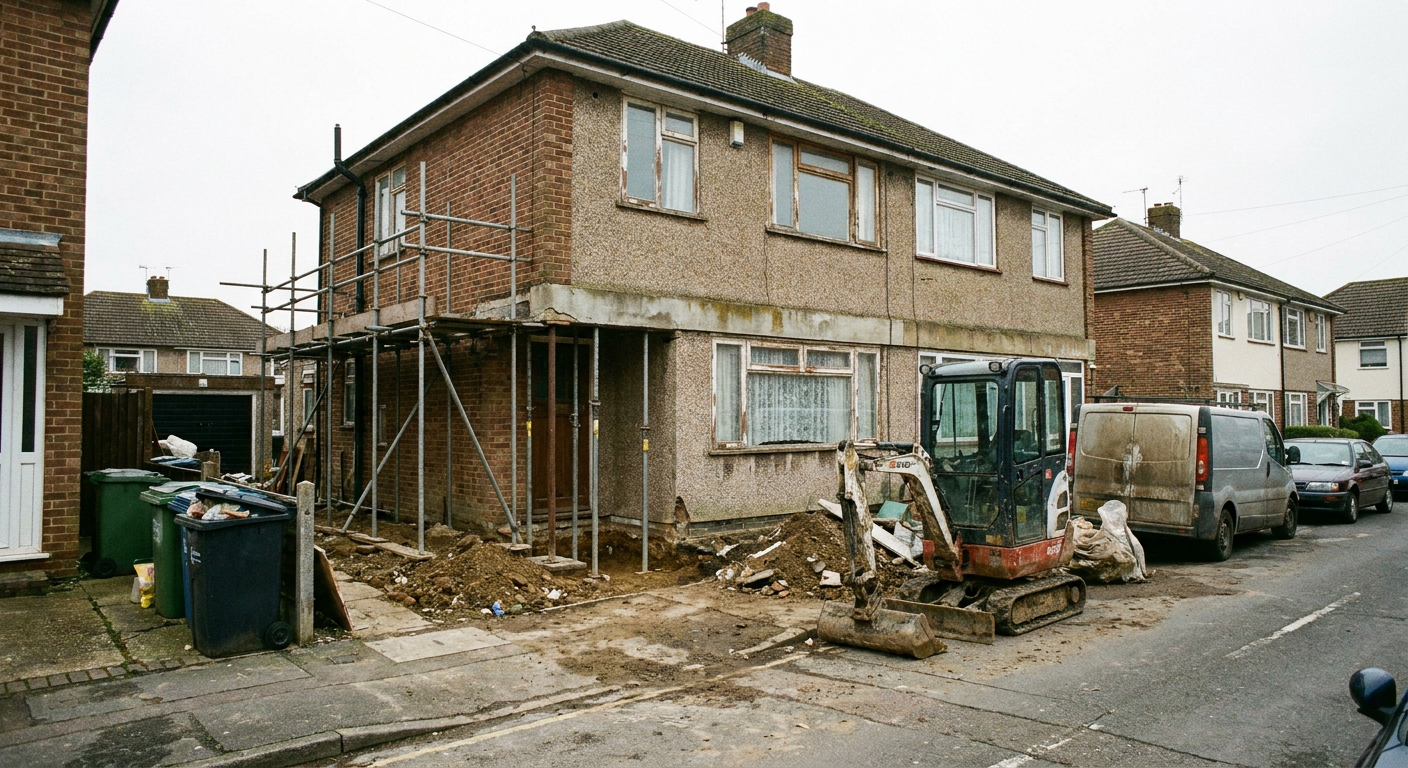
Foundation work in Romford
What a specialist might recommend
- Subsidence assessment
- A specialist visits the home, measures crack widths, checks drain runs and reviews the soil. They produce a report stating whether the movement is active or historic, and what should happen next.
- Underpinning
- Where footings need deeper support, a contractor excavates sections below the existing foundation and pours new concrete in controlled stages. This transfers the load of the house to stable ground.
- Resin injection
- For homes on shrinking clay, a firm injects expanding structural resin beneath the footing. The resin fills voids and compacts soft soil, lifting settled areas back toward their original level.
- Concrete repair
- Cracked garage slabs, drives and internal floors are broken out or stabilised. A specialist replaces damaged concrete and addresses whatever caused the original failure so it does not return.
- Screw piling
- Steel piles are driven deep into the ground using hydraulic torque. They bypass weak upper layers entirely and provide a fixed base for extensions, outbuildings or heavily loaded sections of a house.
Towns covered across Havering
Enquiries from anywhere in the borough reach a specialist who works there. Each area page describes the local ground conditions and the housing types most likely to suffer movement.
If your street is not listed, send an enquiry anyway. Coverage extends across the whole borough.
Tell someone what you have seen
Write down where the cracks are and how long they have been there. A specialist covering Romford will read your description and respond with advice. Sending this does not commit you to any work or payment.
- No obligation
- Free to send
- Local specialists